
Model Assurance
Independent testing of production ML and LLM systems for bias, drift, robustness and security.
Definition
What is Model Assurance?
Model Assurance is the independent validation that an ML or LLM system performs as claimed — accurately, fairly, robustly and securely — across its intended operating range. It is the AI equivalent of model risk management (SR 11-7) extended to modern generative systems.
Overview
How we approach it
We test models against the use cases they will actually face, not just the training distribution.
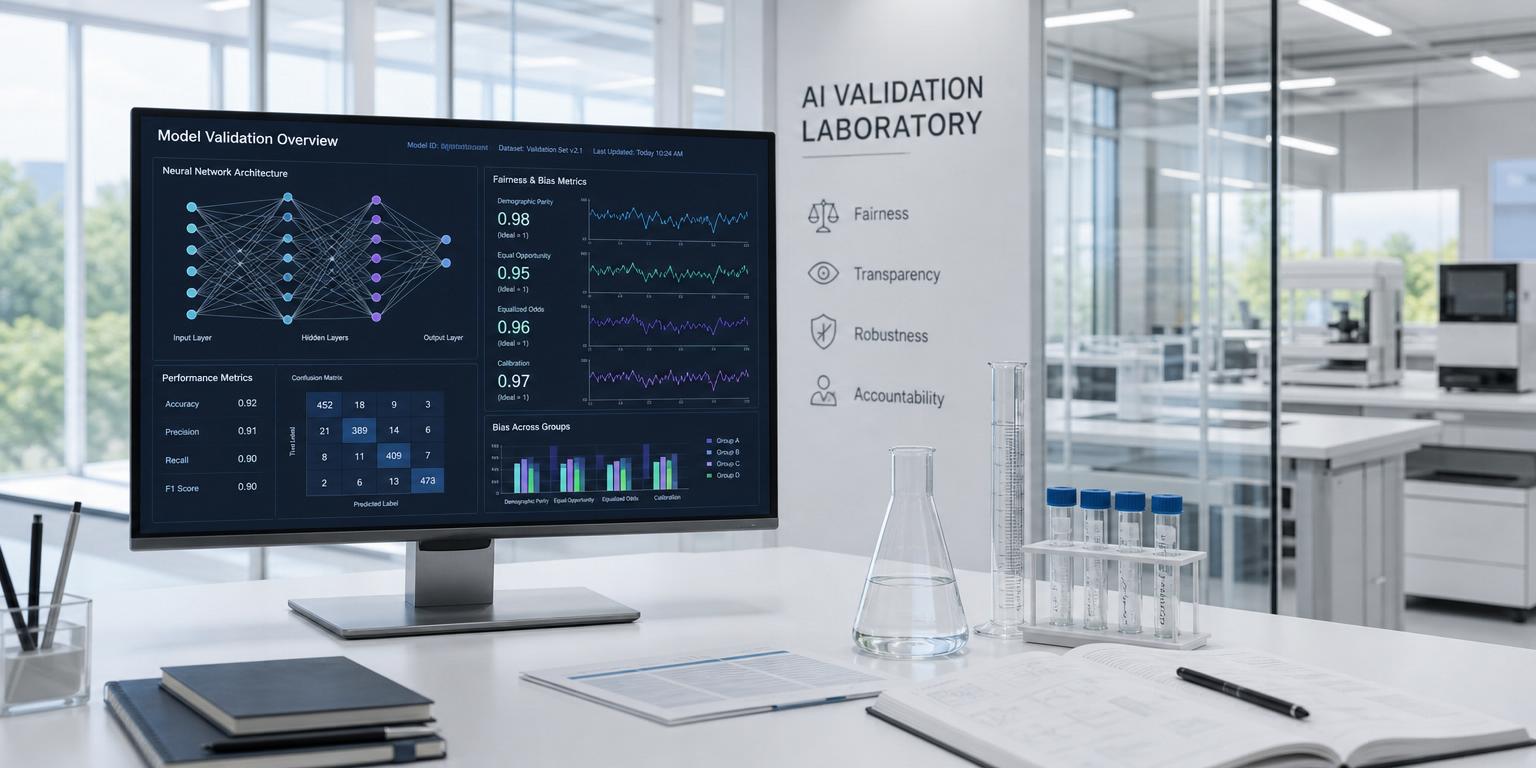
Bias, fairness, robustness, drift, explainability and security are evaluated and documented.
Findings feed back into model cards, datasheets and monitoring dashboards.
What we do
Scope of the engagement
Bias & fairness
Group-fairness metrics, intersectional analysis, mitigation recommendations.
Robustness & drift
Adversarial perturbations, distribution-shift tests and continuous monitoring.
LLM evaluations
Prompt injection, hallucination, toxicity, jailbreak resistance and RAG faithfulness.
Documentation
Model cards, datasheets, validation reports — regulator and customer ready.
Outcomes
What you walk away with
- Independent attestation of model quality
- Reduced risk of regulatory and reputational harm
- Production monitoring that catches issues before users do
FAQ
Common questions
Do you cover GenAI and traditional ML?
Both. Different test suites, same assurance discipline.
SR 11-7 applicable?
Yes — our methodology aligns to SR 11-7 and is extensible to GenAI.
Other services
Continue exploring
IT Risk Assessment
Quantitative risk modeling that translates technical findings into financial loss exposure your board can act on.
ReadCybersecurity
End-to-end cyber defense — from zero-trust architecture to 24/7 managed detection and response.
ReadAI Governance
Stand up an AI program that satisfies regulators while enabling teams to ship responsibly.
Read